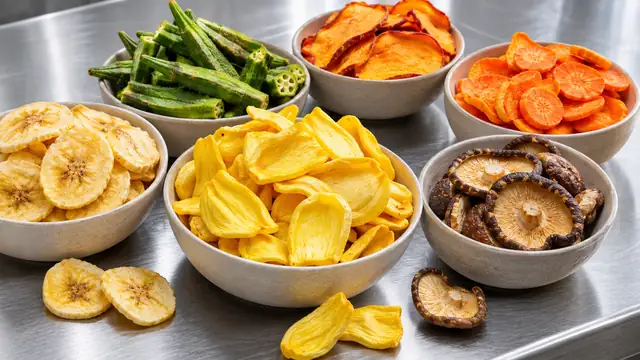
Short answer: Choose freeze drying for zero-oil, airy products that rehydrate and keep near-fresh colour and nutrients; choose vacuum frying for denser, chip-style crunch with a richer taste, much shorter cycles (25–80 minutes vs 18–30 hours) and lower capital cost per kilogram.
How each process works
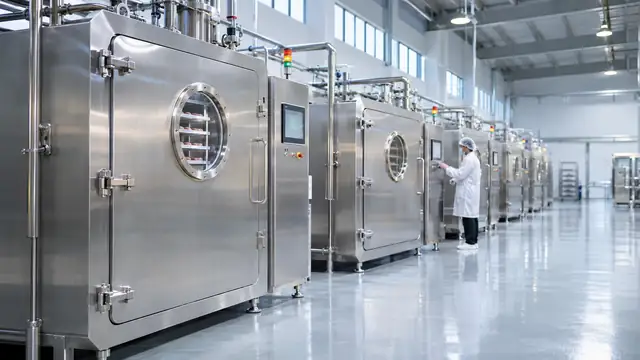
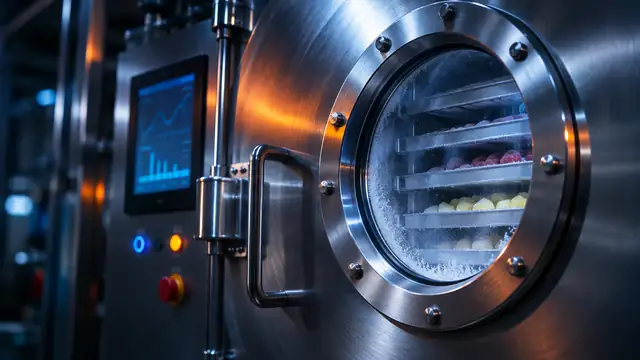
Freeze drying (lyophilization) freezes the product, then lowers chamber pressure so ice turns straight into vapour (sublimation). Gentle shelf heat supplies the energy; a cold trap at around −60 °C captures the vapour. No oil is involved.
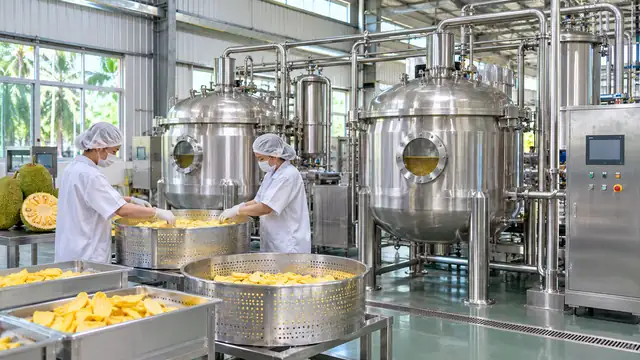
Vacuum frying immerses the product in oil inside a sealed vessel at about −0.092 to −0.098 MPa. Under vacuum, water boils at much lower temperatures, so frying happens at 80–100 °C instead of 160–180 °C. A centrifuge then spins oil off under vacuum.
Side-by-side comparison
| Aspect | Freeze drying | Vacuum frying |
|---|---|---|
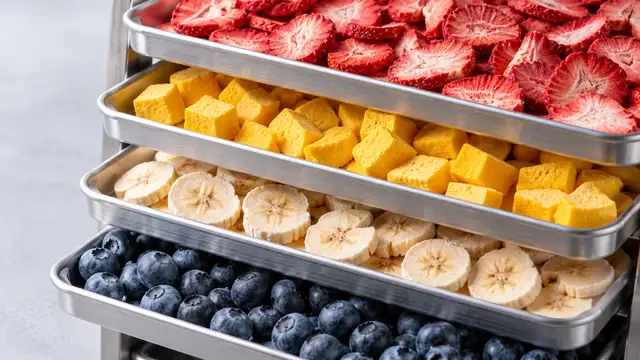
| Texture | Light, airy, melts in the mouth | Dense, crisp chip crunch |
| Oil content | 0% | 13–20% after de-oiling |
| Colour & aroma | Closest to fresh | Bright, natural, lightly roasted notes |
| Cycle time | 18–30 hours | 25–80 minutes |
| Shelf life | Long, with moisture-barrier packaging | Long, with nitrogen flushing |
| Typical products | Strawberries, yogurt bites, pet treats, instant meals | Jackfruit, banana, okra, sweet potato, mushroom chips |
| Equipment | Food freeze dryers | Vacuum fryers |
When to choose freeze drying
- You need a zero-oil, clean-label product.
- The product must rehydrate (instant meals, soups, coffee, baby food).
- You are making pet treats from raw meat or fish.
- Premium price positioning justifies longer cycles.
When to choose vacuum frying
- You want chip-style crunch and fuller flavour.
- Fast turnover matters — many batches per shift.
- Your raw material is starchy or fibrous (jackfruit, taro, sweet potato, okra).
- You want lower capital cost per kilogram of output.
Can one factory do both?
Yes — and many snack brands do. A typical starter set is a QS-VF10 pilot vacuum fryer plus a QS-FD-20 freeze dryer, which lets you develop and sell both product types before scaling either line.
Related Questions
Are vacuum-fried chips healthier than regular fried chips?
They are fried at 80–100 °C instead of 160–180 °C, which preserves more colour and nutrients and greatly reduces acrylamide formation; centrifugal de-oiling also brings oil content down to around 13–20%.
Which is more expensive to run?
Freeze drying uses more energy per kilogram of water removed and has much longer cycles. Vacuum frying uses oil and steam but turns batches in under an hour.